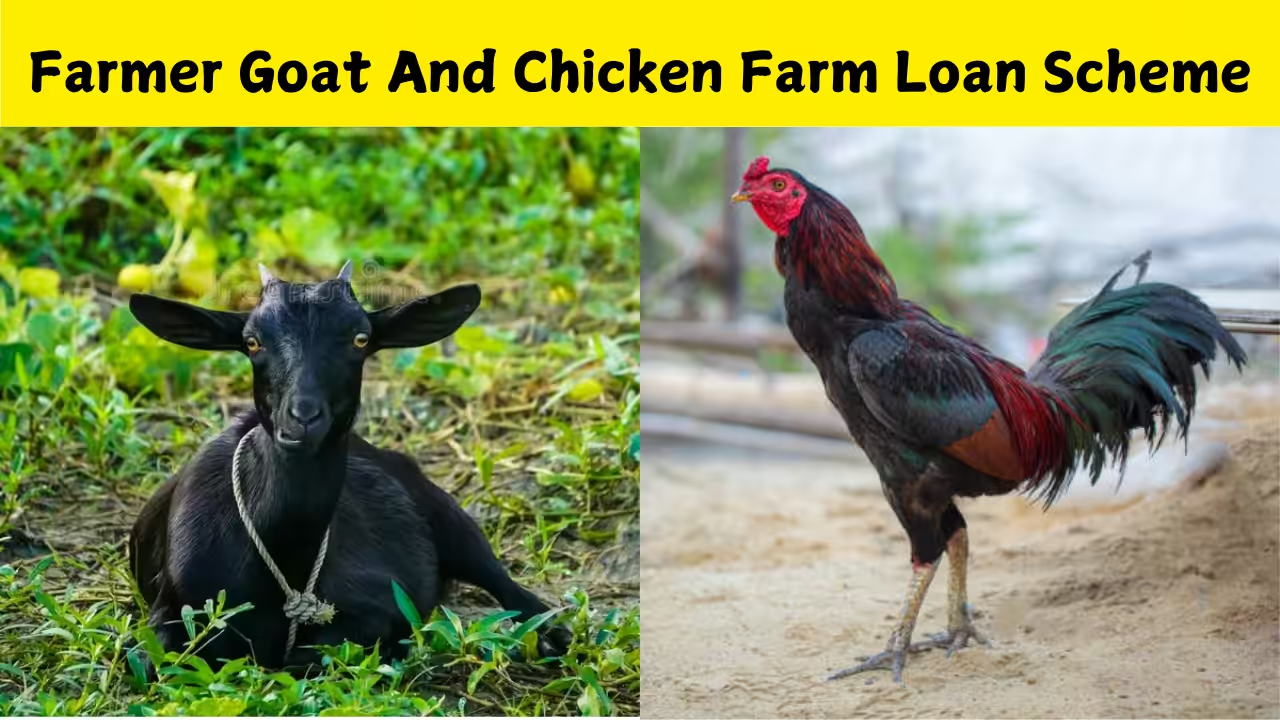
Introduction to the Farmer Goat and Chicken Farm Loan Scheme
The Farmer Goat and Chicken Farm Loan Scheme is a financial initiative aimed at providing farmers, especially in rural and semi-urban areas, with access to affordable credit to start or expand goat and chicken farming activities. Livestock farming, particularly goat and poultry rearing, plays a vital role in boosting rural incomes, improving nutrition, and creating self-employment opportunities. This scheme helps farmers overcome financial barriers and adopt modern, profitable farming practices.
Purpose and Importance of the Scheme
The core objective of this loan scheme is to support small and marginal farmers, landless agricultural laborers, and rural entrepreneurs in establishing profitable goat and chicken farms. It promotes inclusive rural development by enabling beneficiaries to generate stable income through livestock rearing. Goat and poultry farming requires relatively low investment compared to other agricultural enterprises, and this scheme provides structured financial support to maximize returns.
Eligibility Criteria for Applicants
Farmers, self-help groups (SHGs), farmer producer organizations (FPOs), and cooperatives involved in agriculture and allied sectors are usually eligible to apply for this loan. Applicants should demonstrate a genuine need for financing and the capability to manage livestock enterprises. Priority is often given to small and marginal farmers, women entrepreneurs, and individuals from economically weaker sections.
Types of Financing and Loan Structure
The scheme typically offers term loans to cover essential expenses required to set up or expand goat and chicken farms. These expenses may include the purchase of livestock, construction of sheds and shelters, procurement of feed and equipment, vaccination and healthcare costs, and working capital for operational needs. The loan amount varies based on the scale of the farming activity and the applicant’s creditworthiness. Often, subsidized interest rates are provided to make the loans more affordable.
Subsidy and Government Support Components
In many regions, central and state governments provide additional incentives and subsidies to enhance the scheme’s impact. These subsidies may cover a percentage of the project cost or reduce the interest burden on farmers. Government support may also extend to training programs, veterinary services, and market linkages to ensure sustainability and profitability. To apply for the Farmer Goat and Chicken Farm Loan Scheme, applicants must approach recognized financial institutions such as nationalized banks, regional rural banks, cooperative banks, or microfinance organizations. A formal application must be submitted along with necessary documents, including identity proof, land or residence proof, project proposal for livestock farming, and income details. Banks assess the application based on feasibility, financial stability, and repayment capacity.
Role of Banks and Financial Institutions
Banks and financial institutions play a crucial role in disbursing loans under the scheme. They evaluate project proposals, disburse funds, and provide guidance on financial management practices. Lending institutions may also offer periodic reviews and support to help farmers improve productivity and ensure timely loan repayment. In some cases, partnering agencies conduct awareness campaigns and training to educate farmers about best practices in goat and poultry farming.
Benefits for Farmers and Rural Communities
This loan scheme brings multiple benefits to farmers and rural households. It enables consistent income generation through the sale of livestock products such as meat, eggs, and milk. Goat and chicken farming also provides employment opportunities for family members and increases resilience against agricultural risks like droughts or crop failures. The multiplier effect of enhanced rural incomes contributes to improved living standards and economic growth.
Challenges and Considerations
Despite its advantages, the scheme may present challenges. Farmers must ensure proper animal care, disease management, and efficient marketing to realize profits. Lack of awareness, inadequate infrastructure, and limited access to veterinary services can hinder farm productivity. Training programs and extension services are essential to help beneficiaries overcome these obstacles.
Success Stories and Community Impact
Many farmers who have benefited from the loan scheme have transformed their livelihoods. Success stories often highlight how initial financial support enabled farmers to establish thriving goat and poultry farms, increase household incomes, and invest in education and health. Community impact includes job creation, local market development, and enhanced food security.
How to Maximize Benefits from the Scheme
To make the most of the Farmer Goat and Chicken Farm Loan Scheme, prospective applicants should create a well-defined business plan that includes cost estimates, livestock care practices, and market projections. Regular record-keeping, adoption of modern farming techniques, and continuous learning through agricultural extension services increase the chances of success and financial stability.
Future Prospects of Livestock Farming
As demand for goat meat, chicken meat, and eggs continues to rise, livestock farming presents promising opportunities for rural entrepreneurs. The Farmer Goat and Chicken Farm Loan Scheme serves as a stepping stone toward professional livestock enterprises, encouraging innovation, sustainability, and inclusive growth in the agricultural sector. The Farmer Goat and Chicken Farm Loan Scheme is a meaningful financial initiative designed to empower rural farmers with the resources needed to build profitable livestock businesses. By offering accessible credit, supportive services, and opportunities for skill development, this scheme plays a significant role in enhancing rural incomes and transforming agricultural livelihoods. For aspiring farmers and existing livestock entrepreneurs alike, this scheme opens the door to sustainable growth and economic resilience.