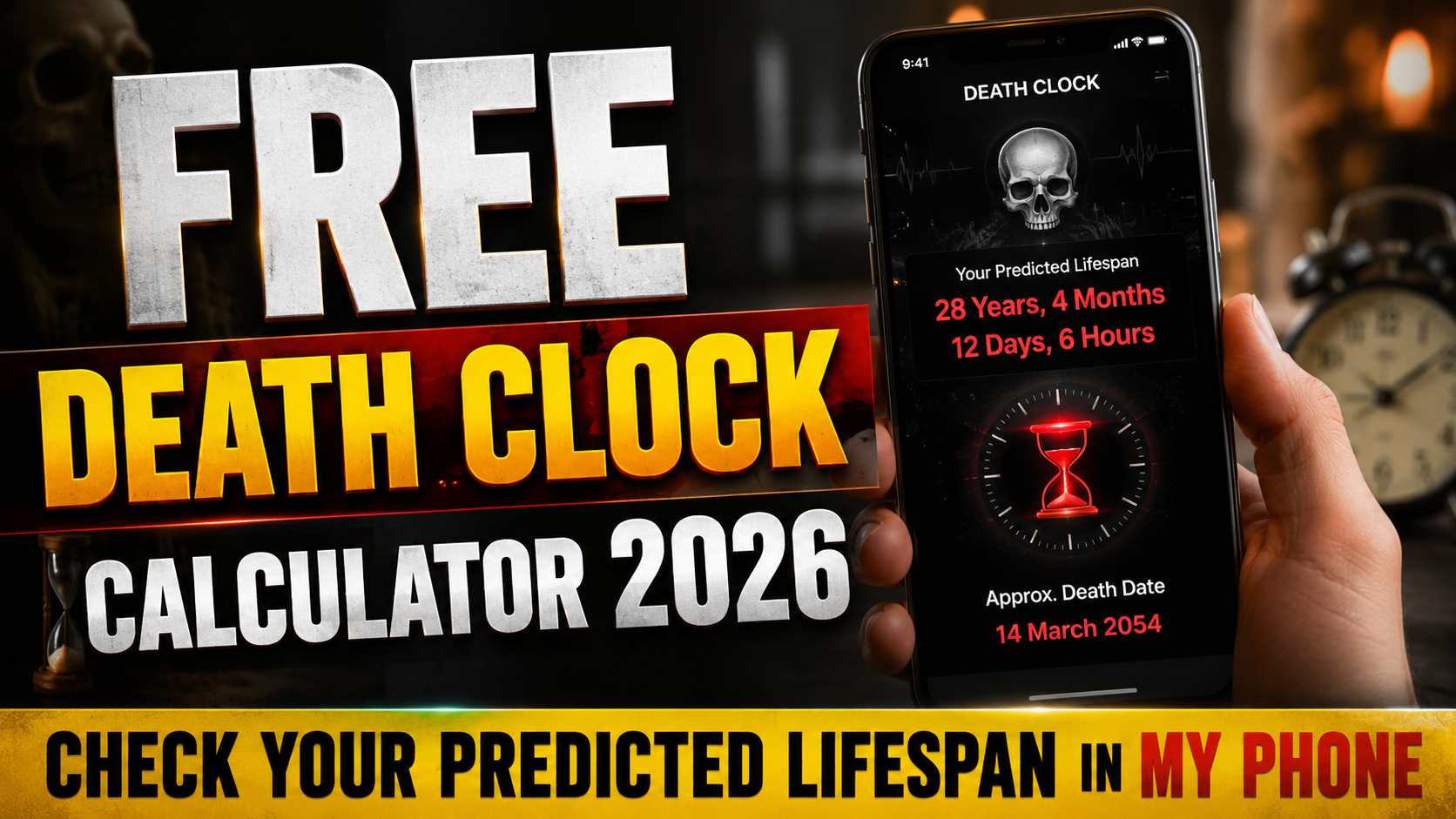
The Death Clock Date Calculator (2026) is an online life expectancy tool that estimates how long a person may live based on personal details such as age, gender, lifestyle, body measurements, and health habits. Although these calculators have become increasingly popular, they are designed to provide statistical estimates rather than predict the exact date of death. Most modern calculators use mortality data, actuarial models, and health-related information to generate personalized results.
What Is a Death Clock Date Calculator?
A Death Clock Date Calculator is a digital tool that estimates your expected lifespan by analyzing information such as your date of birth, biological sex, country of residence, body mass index, smoking status, physical activity, sleep quality, and other lifestyle factors. The result is based on average life expectancy data and population statistics instead of supernatural predictions or certainty.
How Does the Calculator Work?
Most calculators begin by collecting basic personal information before evaluating additional health and lifestyle details. Advanced versions also consider exercise habits, diet quality, stress levels, alcohol consumption, existing medical conditions, and family history. Using actuarial life tables and statistical survival models, the calculator estimates a probable lifespan and sometimes provides a projected death date along with health improvement suggestions.
Factors That Influence Life Expectancy
Life expectancy is affected by many interconnected factors rather than a single measurement. Age, genetics, smoking, obesity, blood pressure, diabetes, physical activity, nutrition, sleep, mental health, and access to healthcare all play significant roles. Healthy daily habits can positively influence long-term outcomes, while unhealthy behaviors may reduce average life expectancy according to population-based research.
Are Death Clock Calculators Accurate?
No online calculator can accurately predict the exact date or time a person will die. These tools estimate probabilities using historical health and mortality data collected from large populations. Unexpected illnesses, accidents, medical advancements, environmental changes, and countless personal circumstances cannot be predicted by any algorithm, making the results educational rather than factual.
Why Are These Calculators So Popular?
Many people use Death Clock calculators out of curiosity, while others use them as motivation to improve their health. Seeing an estimated lifespan often encourages users to exercise more, quit smoking, improve their diet, maintain a healthy weight, and schedule regular health checkups. For some, the tool serves as a reminder to make healthier lifestyle choices instead of focusing on the prediction itself.
Benefits of Using a Life Expectancy Calculator
A life expectancy calculator can increase awareness about personal health risks and encourage preventive care. Many calculators provide personalized recommendations that highlight areas for improvement, helping users understand how small lifestyle changes may contribute to better long-term health. These insights are intended to promote healthier living rather than create fear or anxiety.
Limitations You Should Know
Despite using scientific models, Death Clock calculators have important limitations. They cannot account for future medical treatments, sudden accidents, rare diseases, genetic discoveries, or unexpected life events. Personal privacy is another consideration, as some platforms request detailed health information before generating results, so users should review privacy policies before sharing sensitive data.
Tips to Improve Your Estimated Lifespan
Most longevity experts agree that healthy daily habits can improve overall life expectancy. Regular exercise, nutritious eating, quality sleep, stress management, avoiding tobacco, limiting alcohol, maintaining a healthy body weight, and scheduling routine medical checkups are consistently associated with better long-term health outcomes. These recommendations are supported by extensive public health research rather than any single calculator.
Should You Trust the Results?
Death Clock Date Calculators should be viewed as educational tools rather than medical predictions. They can provide useful insights into lifestyle risks and encourage healthier choices, but they should never replace advice from qualified healthcare professionals. Treat the estimated date as a statistical projection, not a guarantee of what will happen in the future.
Download App
The Death Clock Date Calculator (2026) offers an interesting way to explore life expectancy using health and lifestyle information. While the technology behind these calculators relies on real statistical models and mortality data, no website or application can accurately predict the exact date of death. The greatest value of these tools lies in encouraging healthier habits, increasing awareness of personal wellness, and inspiring people to make choices that support a longer and healthier life.