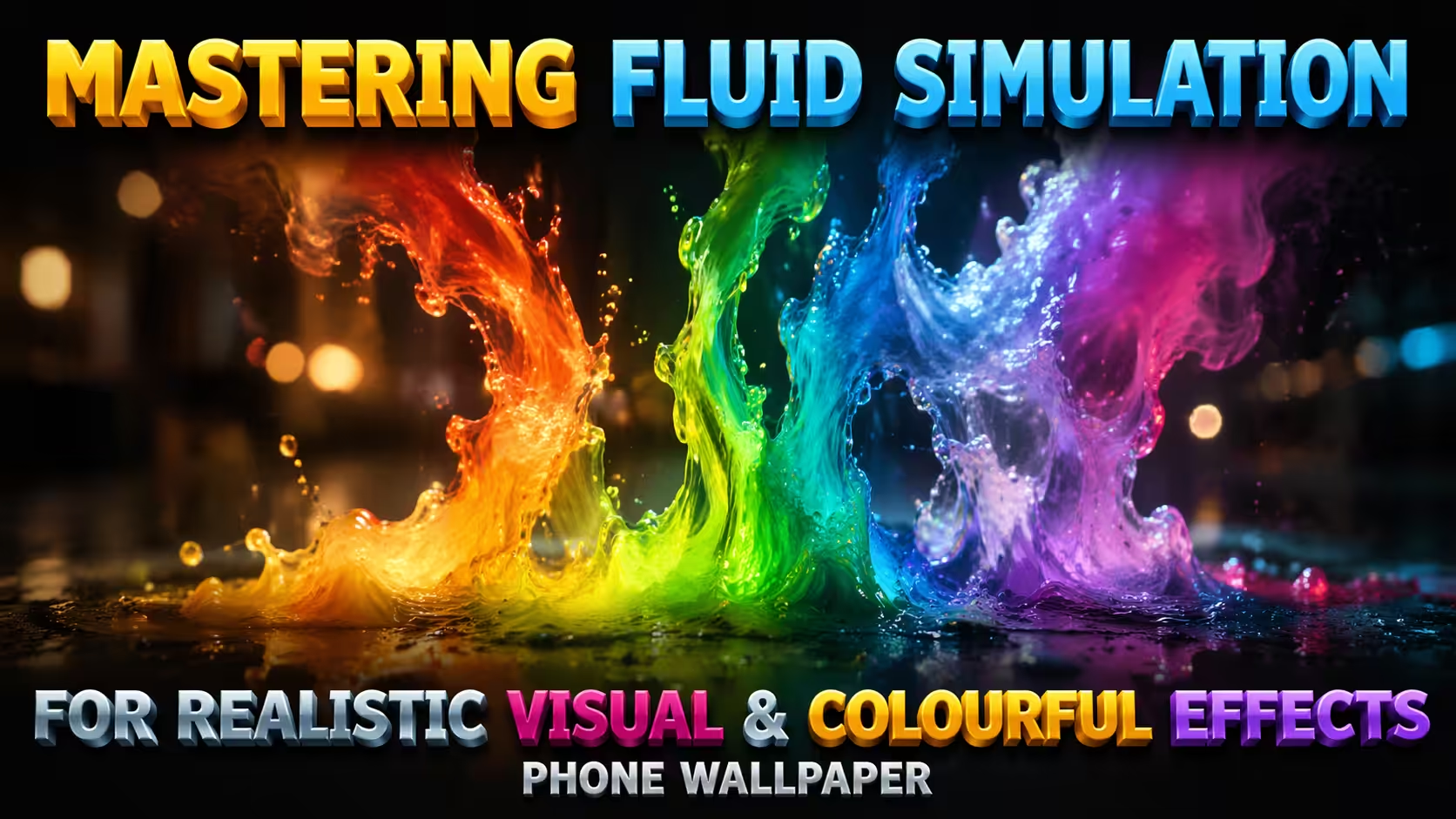
Understanding the Concept of Fluid Simulation
Fluid simulation is the process of digitally recreating the movement of liquids and gases using mathematical models. It allows computers to mimic how water flows, smoke rises, or fire spreads, creating highly realistic visuals that behave like real-world fluids.
The Science Behind Fluid Motion
At the core of fluid simulation lies physics, particularly the study of how fluids move and interact with forces. Concepts like pressure, velocity, and viscosity determine how a fluid behaves. These scientific principles are translated into algorithms that computers can process efficiently.
Why Fluid Simulation Matters Today
Fluid simulation plays a crucial role in various industries, especially in films, games, and scientific research. It helps create stunning visual effects in movies, realistic water in video games, and accurate models for weather prediction and engineering.
Types of Fluids in Simulation
Not all fluids behave the same way. Liquids like water are dense and cohesive, while gases like smoke and air are more chaotic and free-flowing. Simulation systems are designed differently depending on the type of fluid being modeled.
How Computers Simulate Fluids
To simulate fluids, computers divide space into grids or particles. These elements interact with each other based on physical rules. Each frame of the simulation calculates how the fluid should move, resulting in smooth and continuous motion over time.
Grid-Based vs Particle-Based Simulation
There are two main approaches to fluid simulation. Grid-based methods use fixed spaces to calculate fluid movement, making them ideal for large-scale simulations. Particle-based methods track individual fluid particles, offering more detailed and dynamic results.
The Role of Algorithms in Realism
Advanced algorithms make fluid simulation more realistic by handling turbulence, splashes, and collisions. These calculations are complex but essential for achieving natural-looking movement that closely matches real-world behavior.
Applications in Movies and Gaming
Fluid simulation is widely used in entertainment. From ocean waves in blockbuster films to realistic rain effects in video games, it enhances immersion and visual quality. These effects often go unnoticed but play a huge role in storytelling.
Challenges in Fluid Simulation
Simulating fluids is computationally expensive and requires significant processing power. Achieving both realism and performance is a constant challenge, especially in real-time applications like gaming.
The Rise of Real-Time Fluid Simulation
With advancements in hardware and software, real-time fluid simulation is becoming more common. Game engines and creative tools now allow developers and artists to create fluid effects instantly without long rendering times.
Download App
The Future of Fluid Simulation Technology
The future of fluid simulation is driven by artificial intelligence and improved computing power. As technology evolves, simulations will become faster, more realistic, and more accessible, opening new possibilities for creators and researchers alike.