TN Solar Scheme for Residential Homes
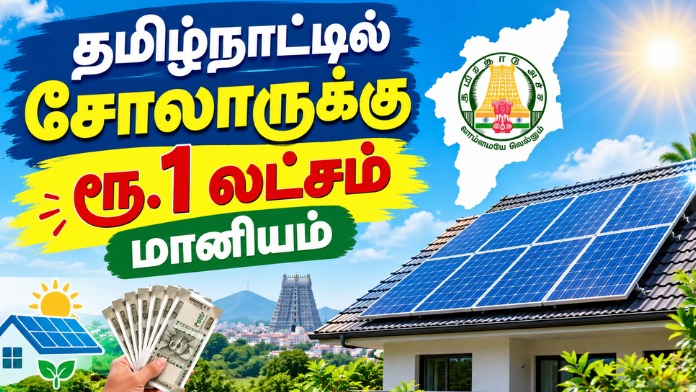
The Tamil Nadu government is promoting rooftop solar through the TN Solar Homes Portal, working alongside the central government’s PM Surya Ghar Muft Bijli Yojana. Under the current Tamil Nadu portal, eligible residential consumers can receive central and state financial assistance for rooftop solar installation. The combined assistance can reach up to ₹1 lakh for a household, subject to scheme conditions and eligibility requirements.
How TN Solar Subsidy Works
The current structure combines the central subsidy with an additional Tamil Nadu state subsidy. For a 1 kW rooftop system, the portal shows ₹30,000 central assistance and ₹5,000 Tamil Nadu assistance. For 2 kW, the figures are ₹60,000 and ₹10,000 respectively. For 3 kW, the central assistance is ₹78,000 and the Tamil Nadu top-up is ₹22,000, taking the combined assistance to ₹1 lakh.
PM Surya Ghar and Tamil Nadu Solar
The central PM Surya Ghar Muft Bijli Yojana forms an important part of the rooftop solar process in Tamil Nadu. Consumers generally begin the process through the national PM Surya Ghar portal, after which the Tamil Nadu system handles the relevant state-level process. The Tamil Nadu Solar Homes Portal states that the state top-up is processed after the central subsidy information is received and eligibility requirements are verified.
Who Can Benefit From TN Solar
The scheme is primarily designed to support residential rooftop solar consumers. The Tamil Nadu Solar Homes Portal currently states that residential rooftop systems covered by the scheme can be up to 10 kW, while the maximum combined subsidy shown for a household is ₹1 lakh. Actual eligibility depends on the applicable scheme guidelines, installation requirements and verification process.
TN Solar Application Process
The application process begins with registration on the PM Surya Ghar national portal using the consumer details. After the application reference is generated, feasibility approval and other procedures are handled through the relevant Tamil Nadu electricity system. Consumers then select an empanelled vendor, install the rooftop solar system and proceed through inspection, metering and commissioning before the applicable subsidy is released.
Choosing an Approved Solar Vendor
Selecting an authorised or empanelled vendor is an important part of the TN Solar installation process. The current Tamil Nadu portal specifies that eligible systems must use compliant modules and be installed through TEDA-empanelled vendors under the applicable scheme requirements. Consumers should verify vendor details through the official portal before making installation or payment decisions.
Solar Panels Can Reduce Electricity Costs
Rooftop solar can help households generate electricity from sunlight and reduce their dependence on electricity purchased from the grid. The actual savings will depend on factors such as system capacity, household consumption, sunlight availability, roof conditions, equipment performance and applicable electricity regulations. The Tamil Nadu portal indicates that a 3 kW system can generate benefits equivalent to up to 300 free units per month under its stated scheme explanation, with surplus generation potentially exported to the grid.
Net Metering and Solar Power
Net metering is an important part of grid-connected rooftop solar for eligible domestic consumers. Solar electricity generated during suitable periods can be used by the household, while excess generation may be supplied to the electricity grid according to the applicable regulations and metering arrangement. Tamil Nadu’s solar documentation describes net metering for domestic consumers under the relevant regulatory framework.
Cost of Installing TN Solar Panels
The actual cost of a rooftop solar system varies depending on capacity, equipment, installation requirements, roof structure and vendor pricing. The current TN Solar Homes Portal provides indicative market-price ranges. For example, it lists approximately ₹70,000–₹85,000 for 1 kW, ₹1.30 lakh–₹1.55 lakh for 2 kW and ₹1.80 lakh–₹2.20 lakh for 3 kW before the displayed subsidies. These figures are indicative rather than a guaranteed installation price.
Documents and Verification
Consumers should provide the information and documents required during the application and verification process. The process can involve consumer details, electricity connection information, bank details and installation-related records. The Tamil Nadu portal explains that subsidy release is linked to successful installation, net metering, commissioning, central subsidy disbursal and satisfaction of the applicable eligibility conditions.
TN Solar Can Support a Greener Future
Solar power gives households an opportunity to generate renewable electricity directly from their rooftops. Along with potential electricity-bill savings, rooftop solar can contribute to wider renewable-energy adoption. Tamil Nadu’s current Solar Homes initiative is designed to make rooftop solar more accessible by bringing together central assistance, state support, approved vendors and the electricity-distribution process.
How to Check TN Solar Benefits
Anyone interested in installing rooftop solar in Tamil Nadu should check the official TN Solar Homes Portal for the latest subsidy structure, eligibility conditions, empanelled vendors and application instructions before proceeding. The portal also provides a benefit calculator and official scheme resources. Since subsidy rules and implementation procedures can change, checking the latest government information is important before making a financial commitment.